SPOTIFY ANNOUNCES AI PERSONA BADGES
True artist fan connection can only be built on a foundation of trust and authenticity.
In music, that means listeners need to be able to trust that the artist behind the
music is who they say they are. That’s more essential than ever in the age of
generative AI.
So this year, Spotify has made Artist Identity & Trust one of its very top priorities with
the launch of Verified by Spotify, SongDNA, AI Credits, and Artist Profile Protection.
The move forms part of efforts to ensure Spotify is the most transparent and
trustworthy place to listen to music.
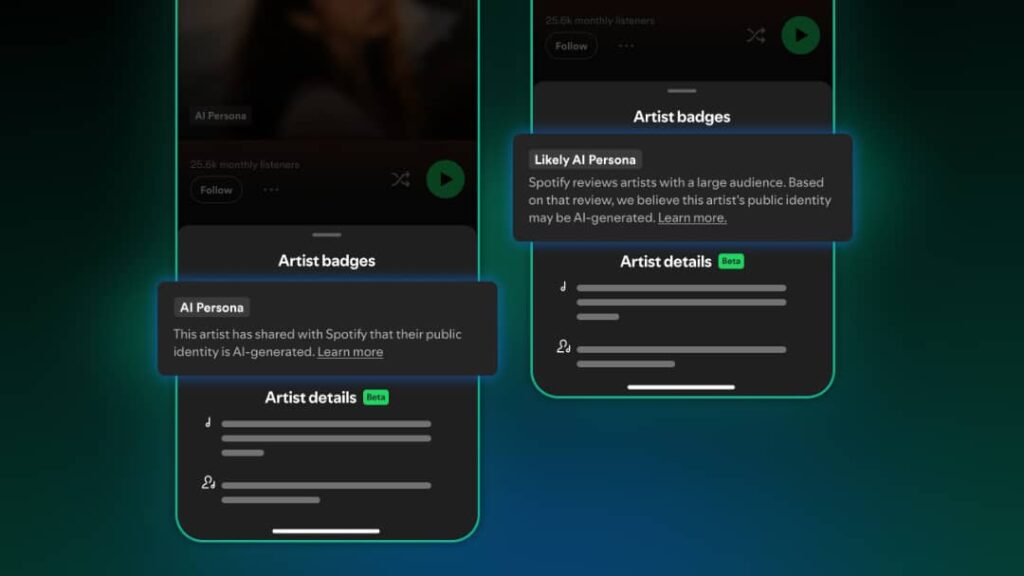
Starting mid-September, users will begin to see an AI Persona badge on some artist
profiles. The badge signals to listeners that an artist’s identity may be AI-generated
and does not represent a real person. Alongside artist profiles that self-disclose as AI
Personas, badges will begin to be applied to relevant profiles.
By default, Spotify will not include AI Personas in any editorial or algorithmic
recommendations. That means listeners won’t see any music from AI Personas in
their personalized recommendations, unless they follow AI Personas, for example.
While the company believes all artists have creative choices in determining how they
present themselves, Spotify’s programming is focused on elevating music from
authentic artists building careers in music.
How it works
Starting today, artists can share that their profile represents an AI Persona through
Spotify for Artists.
Spotify will also review artist profiles and identify those whose public identity—the
identity an artist presents on their profile, including name and imagery—appears to
represent photorealistic AI-generated identities. The company will start with artists
who have met defined audience thresholds, so the labels cover the vast majority of
artist profiles that users visit.
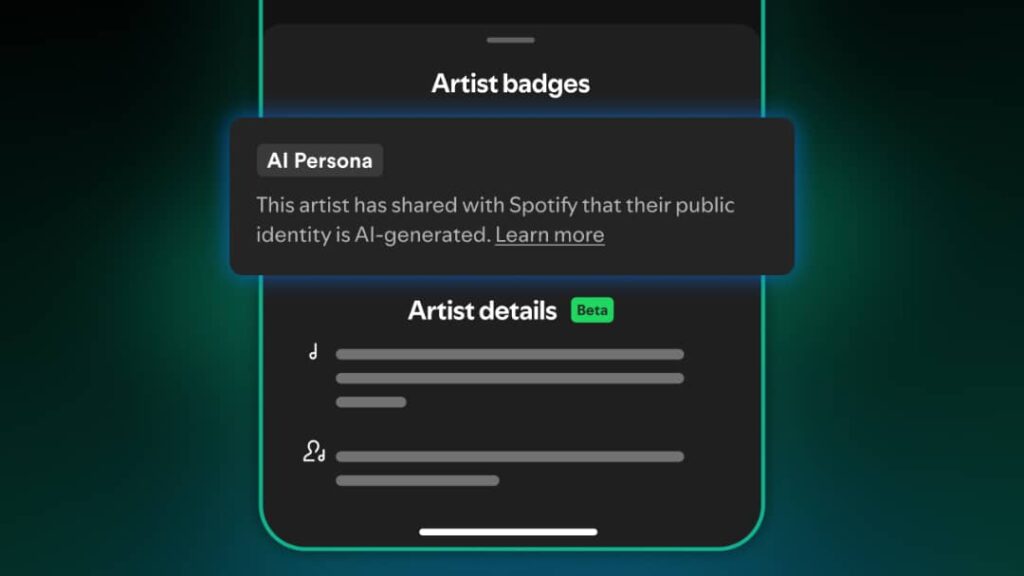
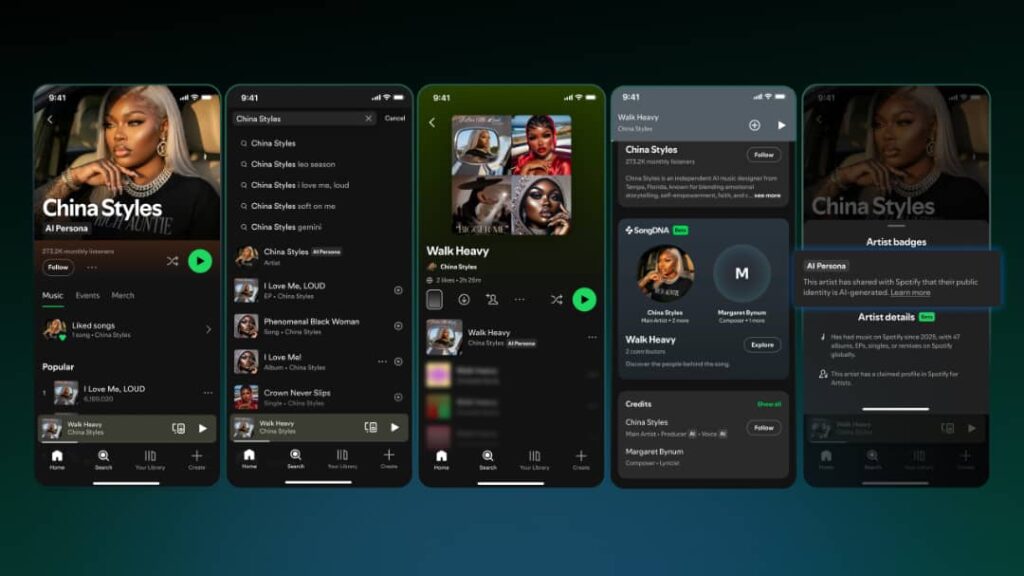
In mid-September, consumers will start to see the AI Persona badge appear on artist
profiles (in the banner and About section), in Search, and on track rows across
playlists. When listeners tap the badge, they’ll be able to see whether the artist
transparently shared that they’re an AI Persona to build trust with potential listeners,
or if Spotify had to review and make an informed determination.
For artist profiles where Spotify’s review team have applied the badge, artists will be
notified and given the opportunity to self-disclose or appeal. In the coming months,
Spotify will also give listeners the ability to report artist profiles they believe represent
AI Personas to its review team.
Although there’s a broad spectrum in how artists use AI as a creative tool, the
question of whether a profile represents an actual human is one where Spotify can
help make a clear determination. This badge is about the artist’s public identity, not
about how the music was made. For more information about how the music was
made, Spotify offers AI Credits and SongDNA.
Building trust and transparency on Spotify
Verified by Spotify signals to listeners an artist is a real human presenting
themselves authentically on the platform. Hundreds of thousands of profiles are
already verified, the majority of which are independent artists, representing more
than 99% of the artists Spotify listeners actively search.
AI Credits allow artists to disclose to listeners how they used AI in their music
creation, with tens of thousands of AI credits submitted daily.
SongDNA gives listeners deeper context on the artists and contributors behind a
track, helping them discover and fall in love with the human creative process.
Artist Details surfaces artist information based on Spotify’s own platform data, such
as career milestones, release history, and touring activity, giving listeners a quick
snapshot of an artist’s authentic activity on Spotify.
Artist Profile Protection lets artists review and approve releases delivered to Spotify
to protect their artist identity and prevent listener confusion about misattributed
music.
In addition to these features, Spotify is tuning its algorithms to highlight authentic
human artists and, based on available signals, strive to not include spam, slop, or
low-effort content in its recommendations.